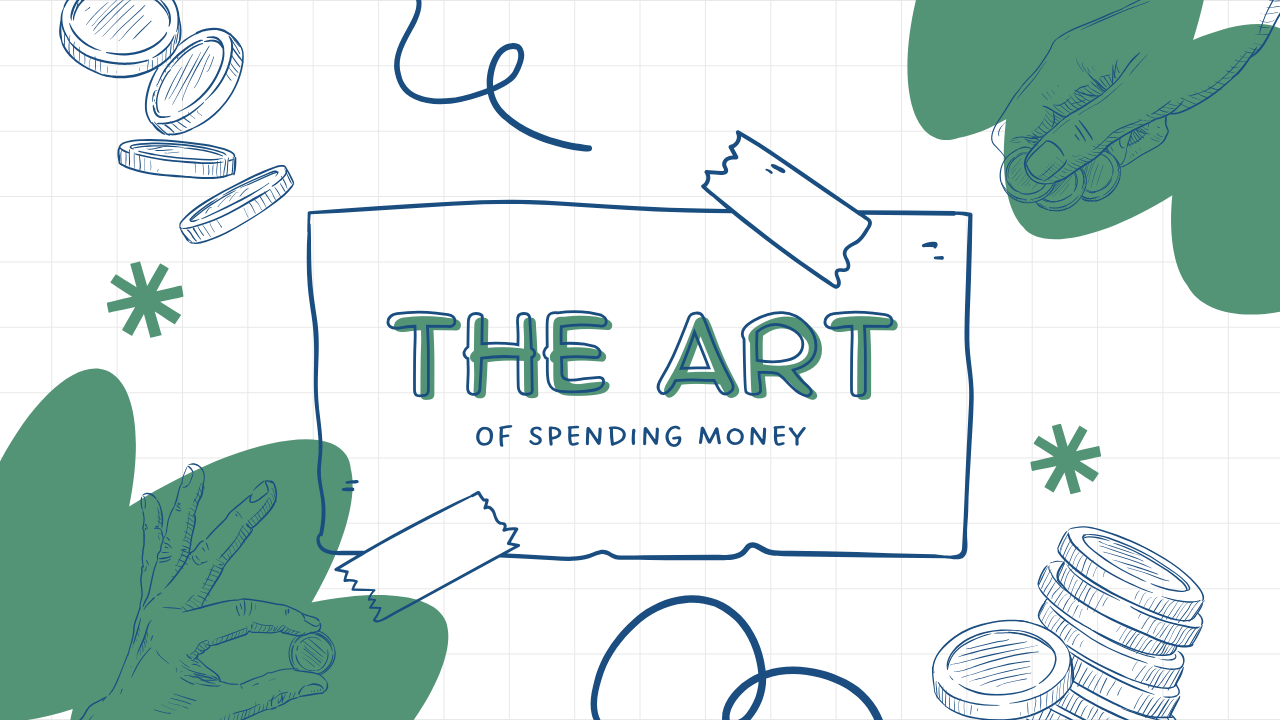
Reflections of a Spender Inspired by The Art of Spending Money by Morgan Housel
Mar 07, 2026By: Celine Fitzgerald
When Kristen first suggested our RisingGen Collective group read The Art of Money: Simple Choices for a Richer Life by Morgan Housel I was nervous! I had a fear of being shamed with each chapter for my past lavish spending [I’ve gotten better], so I put it off for a bit. With our call fast approaching, I knew I had to face my fears and read the book.
To my surprise, once I downloaded it on my Kindle, I could not put it down! I was enthralled with each passing chapter. I was shocked at how I was feeling, but guilt was not the word that came to mind. Alignment, justification, and memories resurfaced as I considered how my past spending habits reflected a particular time in my life. During my 20s and half of my 30s, I was a “joyful patron”.
“We value the attention money brings us more than we value the comfort and convenience of stuff that money can buy.”
I would swipe the credit card without too much thought or remorse. I thought money grew on trees and didn’t believe any consequences would follow. I felt personally responsible for the sales teams at various stores. If I didn’t get there this month, how would they survive OR if they personally invited me to a cocktail & shop party, I had to be there. I can proudly say I have learned the word NO in my late 30’s, but occasionally fall victim to this mindset here and there.
“Your brain doesn’t want stuff. It doesn’t even want new stuff. It wants to engage in the process and anticipation of getting new stuff.”
This quote sums up the decade of my 20s. The question is why - what was I trying to prove when I had nothing to prove? I didn’t think there were any consequences to my spending, and that’s because I didn’t know what was at stake. For the longest time, I was not a responsible steward because I was not aware that I was a real inheritor. Once [light bulb moment] I was properly educated [and communicated with] on being a beneficiary, my outlook changed. As a wealth steward, I realized I wanted to maximize the given opportunity at my fingertips and not squander it away. I had lost control and fallen victim to appearances and what Morgan Housel refers to as “social debt” without even realizing it. While I always understood the value of a dollar and worked hard for a paycheck, I wasn’t worried about spending others’ money - but those choices were not always aligned with my values or happiness.
Now I look at my spending choices over the past 5 years, and wow, has it changed! Maybe it is due to my financially responsible husband, but I no longer find joy in certain spending. I no longer care how others might perceive my lifestyle or if I am living up to their perception of me. I have become more conscientious - a curated spender. While I might spend on my home, [wow…the costs of home ownership are not for the faint of heart!] or for my daughters’ comfort, I also choose to drive a 10 year old car because it makes me happy and because, frankly, who cares. The last thing I want as my girls get older is for my identity to be connected to my “major” purchases. I would much rather my identity be connected to my giving of time, talent, and treasure. Something meaningful my dad instilled in me years ago - “Be defined by what and how you give money away.”
Now, if you walked into my home office, or caught a glimpse of the bottom right corner beyond my desk in the Zoom screen, you might notice something unusual. Instead of shelves lined with books, I have shelves lined with shoes. At first glance, it might look like the old spender in me never quite disappeared. But to me, those shelves are a reminder of the journey this book helped me reflect on. Each pair represents a moment, a stage, or a choice in my life. The difference now is that the shoes are not there to prove anything to anyone else. They are there because I chose them. What once might have been spending driven by appearance or expectation has slowly become something more intentional - choices that reflect who I actually am. As a coach to inheritors, it’s my role to help them make sense of their past and clarify who they want to be in the future - without judgment. And the office shoes are a symbol of just that.
As Morgan Housel states at the end of this book, “and so we end right where we began, with a reminder that all behavior makes sense with enough information, and we are all on our own quest for a simple life.” It doesn’t matter what your spending habits are, as long as you own them, find joy in them, and have them wrapped in some values-based intentionality. No matter what spending personality you align with, they all have their pros and cons - there’s no reason to judge others for their reasoning, as we are all on our own journey. But once you set yourself free of judgment, you’ll hold your head a bit higher. In the end, it’s not about spending less or spending more. It’s about spending in a way that reflects who you are…and who you want to become.